Before Achilles’ fatal war cry shattered her world, Briseis was a princess living a life of privilege. She was married to Mynes, the son of the king of Lyrnessus, a city in the Troad allied with Troy. In the beat of a heart, everything changed when her city was destroyed during the Greek invasion; she witnessed the massacre of her husband, father, and three brothers, along with most other males—many of whom were mere boys. As with Mycenaean Greek conquests, the women were spared, but they were treated as possessions, the spoils of war, stripped of their freedom and dignity and forced to serve their captors in whatever way their captors saw fit.
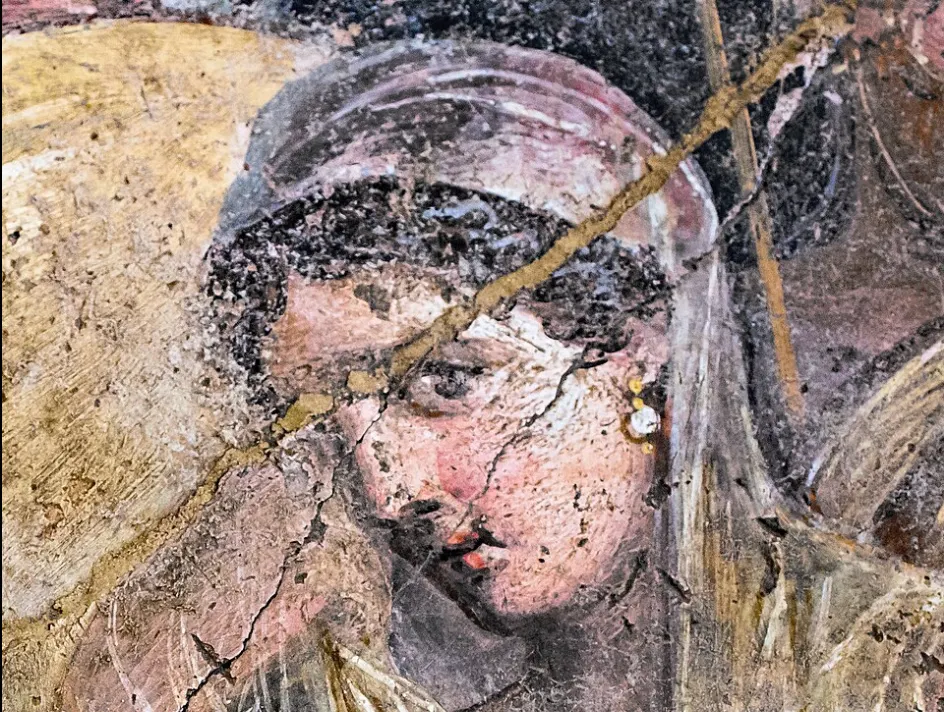
Briseis was no exception, it was in that very way she came to Achilles.
Briseis has intrigued scholars from ancient times to our own. Although she plays a minor role in Homer’s Iliad, her presence looms large throughout the epic, as she unwittingly becomes a catalyst for a schism within the Greek expedition. Her role allows us to witness how heroic honor was dependent on the capture, enslavement, and silence of the vanquished women. With no voice to call her own, her captivity illustrates the brutality of a society where male prestige is contingent upon the subjugation of women.
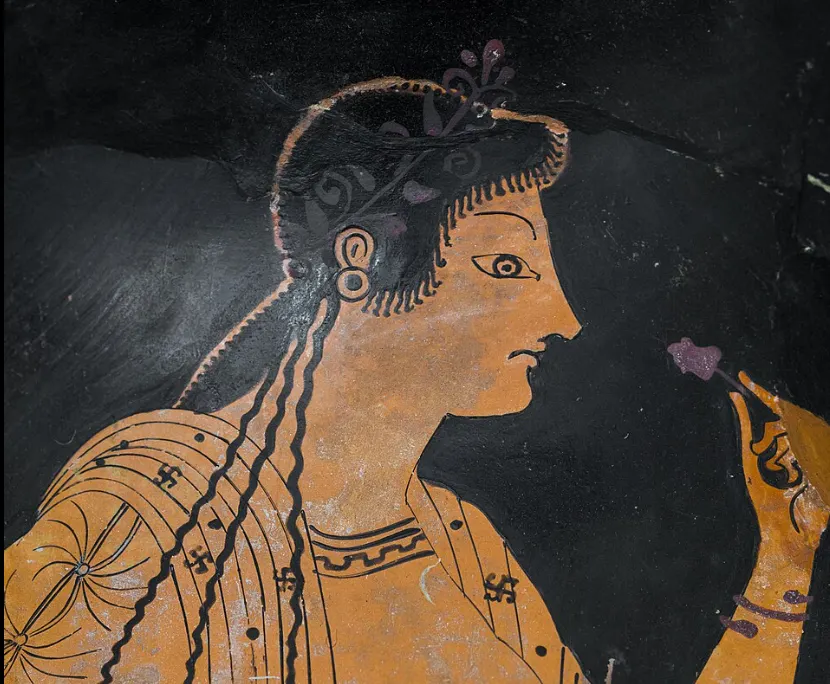
But does Briseis represent a composite archetype of a vanquished woman from the heavily combative Mycenaean era? Through an analysis of the Iliad along with epigraphic evidence—such as the Pylos’ Linear B tablets—we’ll look at her role and investigate whether her narrative reflects the real life experiences of historical women with similar fates. Studying the wider context of these women’s experiences during this turbulent period can reveal more about the societal structures of the Mycenaean civilization that governed their lives.
But perhaps we need to first ask: can the Homeric epics, the Iliad and the Odyssey which are centered on the Trojan War and its aftermath shine a light on how the Mycenaeans lived?
Homer as History
While the prevailing belief has been that the epics exist solely within the realm of mythology, advancements in archaeological science and technology have revealed that much of what was once considered mythology is rooted in historical fact. For example, the excavation of the citadel of Troy in present-day Turkey has confirmed its existence.
Additionally, Mycenae, Sparta, Pylos, and several other cities mentioned in the Iliad and the Odyssey were indeed Mycenaean fortifications or settlements. Many scholars assert that this historicity extends to the lives of the ancients as outlined in the epics. Indelible characters such as “lord of men” Agamemnon, “godlike” Achilles and “fair cheeked” Briseis may have been modeled after archetypal Mycenaeans.
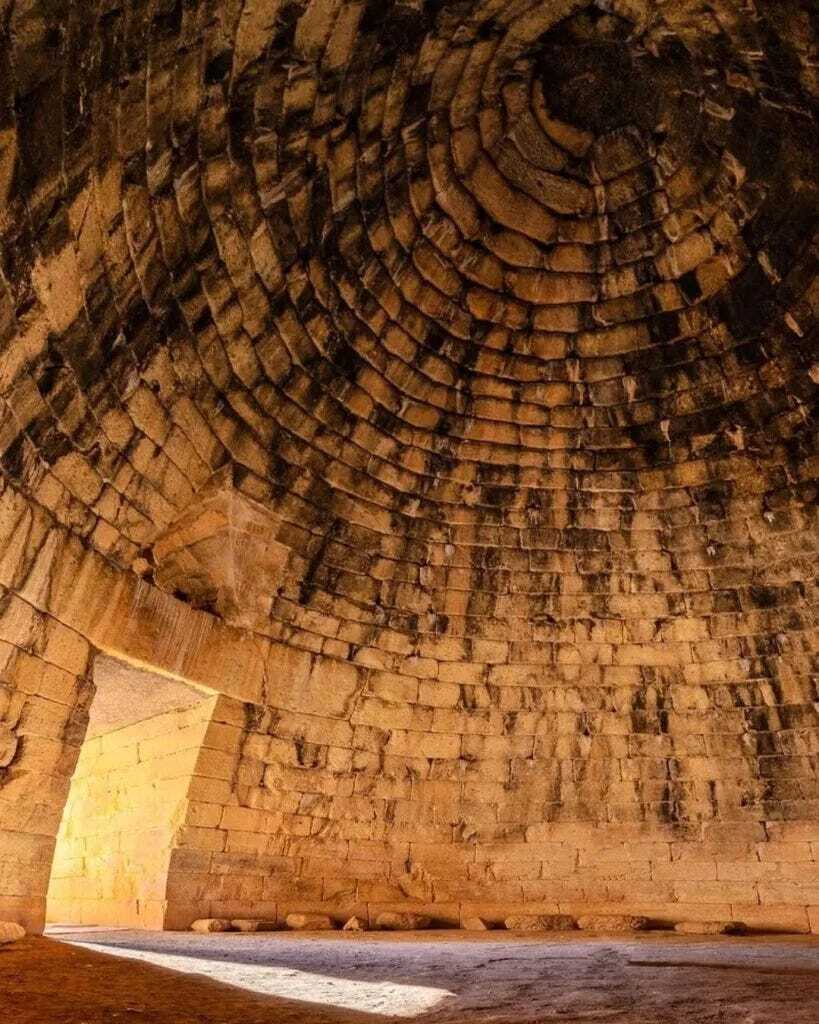
In their own era, the Mycenaeans were famed for their engineering feats with ruins ranked among the wonders of the prehistoric world standing proudly to this day. The late Bronze Age powerhouse built robust reinforced bridges, massive fortification walls, and beehive shape-tombs. With a proclivity for conquest and warfare, they built urban centers and established a centrally organized palatial state complex which served as both a fortified physical stronghold and as a centralized administrative hub, overseen by a king who managed a vast bureaucracy.
The Oral Tradition
When it comes to extolling their other triumphs, the Mycenaeans remain frustratingly mute. They had a writing system,Syllabic Linear B, but it was used primarily for everyday recordkeeping and inventories in their heavily bureaucratic society. Indeed, this once-powerful civilization faded from history without leaving behind a written account of its story, no poetry nor literary works exist.
It was not until the eighth century BCE that Homer—or the poets attributed to him—put stylus to papyrus, capturing for posterity a time when giants walked the earth alongside the gods and the illustrious Mycenaean civilization was still in its prime. Homer inherited a rich collection of tales that had been passed down orally through songs and poetry for centuries before they were finally committed to the written word.
The War Prize: Briseis
The Iliad focuses on roughly fifty-one days of its 10-year-long siege of Troy, and yet it explores universal human themes such as wrath, honor, hubris, and, at long last, redemption. The hero of the tale is Achilles, son of the sea goddess Thetis and King Peleus, who stands out as one of the greatest Greek warriors of all time.
Due to her exceptional beauty, Briseis was awarded to Achilles as a war prize after he almost singlehandedly sacked her homeland. He proudly proclaims: “I ravished it and took away the women as captive slaves robbing them of their day of freedom.” As his possession, Achilles could treat Briseis however he desired. The epic lays bare Briseis’s sexual vulnerability: “Achilles slept inside the well-built hut, and with him lay the beautiful Briseis.” Serving as a concubine to a royally born demigod might have been considered a privilege, but Achilles was not just any demigod; he was a killing machine who murdered Briseis’s husband, her father, and all her male relatives. How enthused could Briseis have been about being the bed slave to her husband’s killer?
But to understand this tragic entanglement, which was likely all too familiar for captive women of the era, we need to go further back to when the story starts.
Agamemnon’s Hubris
The Iliad begins when Agamemnon, the bombastic king of Mycenae and leader of the Greeks, angers the god Apollo because of his extreme hubris against one of his priests. In response, Apollo unleashes a plague upon the Greek camp. To lift the plague, Agamemnon is forced to relinquish Chryseis, an enslaved girl who is his war prize (geras).
Humiliated in front of his troops, Agamemnon brusquely takes Briseis from Achilles in response to his loss. Because of their alpha status among the Greeks, Achilles and Agamemnon were never particularly close, even prior to this incident. Thus, when Agamemnon takes Briseis from Achilles, he does so to outrank him since the largest source of honor amongst the heroes are material possessions—which are always at risk of being lost or taken away.
For all their swaggering patriarchy, a hero’s honor is a vulnerable thing. The leaders with the highest status—like Achilles or Agamemnon—have the most to lose and are more susceptible to the risk of shame or insult. Suffering disgrace could threaten a leader’s singularity with both his peers and his inferiors and lead to the loss of his most prized possessions— enslaved women. In fact, when a hero sacks a city, his status increases substantially by enslaving a valuable woman. As a former princess, Briseis was valuable indeed.
And so, with no say in the matter and like the prized possession she is— Briseis is transferred to Agamemnon’s camp forthwith.
Achilles’ Rage and Patroclus’ Ruse
As his war prize, Briseis embodied Achilles’ honor, and her seizure ignites his fury, prompting him to withdraw from combat. The division between the two heroes reverberates throughout the epic, leading to the decline of Greek forces in key battles against the Trojans. The Greeks begin to lose the war; the Trojans have advanced and are threatening to set fire to their ships.
Patroclus, the longtime friend and possible lover of Achilles, suggests that Achilles can still retain his honor if he allows him to don Achilles’ armor, thus taking on Achilles’ role on the battlefield. The rationale for the disguise is when the Greek warriors see Patroclus as Achilles, it will inspire and invigorate them in their fight. He assures Achilles that he will not stay in battle for long, stating:
“Do not try to hold me back from battle… I will go out as far as the ships that were drawn up first, but I will not go beyond… I will win glory and honor for you.”
The ruse works, and the Greeks push back on their Trojan aggressors, who are terrified and retreat from the Greek encampment. But Patroclus breaks his pledge to Achilles and does not return immediately. Instead, after repelling the Trojans, he gains confidence in his fighting skills and gets too close to the Trojan walls. This incites the wrath of Hector, a Trojan prince and their greatest warrior, who, with help from the god Apollo, mercilessly drives a bronze spear through his back, killing him straight away.
Never one to do anything by halves, when Achilles learns of the death of his constant companion, his grief knows no bounds. Weeping inconsolably, he covers himself with ashes, refusing food or drink, and sleeps alongside Patroclus’s body for days until the gods have to intervene. At long last, a grief-stricken Achilles concedes to Agamemnon and feels compelled not only to blame the victim but also to wish that Briseis had died instead of the Greek soldiers who fell on the battlefield.
“Agamemnon, was it better for both of us, after all, for you and me to rage at each other, raked by anguish and consumed by heartsick strife, all for a young girl? If only Artemis had cut her down at the ships—with one quick shaft—that day I destroyed Lyrnessus and chose her as my prize.”
Despite Briseis’s silence up until this point and complete subjugation to his power, Achilles attributes his bitter estrangement from Agamemnon to her.
The Women of Troy
After the fall of Troy, both Andromache (Hector’s wife) and Hecuba (Hector’s mother)—like Briseis—will be enslaved under the authority of their Greek masters. Although not outlined in the Iliad, we learn about the vanquished women’s fates from a series of poems about the Trojan War called the Epic Cycle, which serves as both a prequel and sequel to the unfinished tales of the Iliad and the Odyssey. Regrettably, the Epic Cycle is not fully extant and only exists as fragments or in quotations from ancient authors.
Classical scholar Casey Dué contends in her book Homeric Variations on a Lament by Briseis, that Briseis’ role in the Iliad is significantly diminished due in part to the overall compression of the Trojan War narrative. She posits that Briseis’s role is more significant in the earlier versions of the narrative within the Epic Cycle and draws a close comparison between Briseis and three principal female figures of the Iliad: Helen, Andromache, and Hecuba. These three women and Briseis are the only female characters in the epic who are privileged with performers of laments and/or speaking parts. Like Helen, Briseis is a catalyst for conflict, and similar to Andromache and Hecuba—who will be enslaved after the fall of Troy—she is also a victim of the war.
The Lament of Patroclus
At this point in the epic to make the reconciliation complete, Agamemnon presents gifts to Achilles. As a gift returned to the man-god, Briseis enters the scene “as bright as golden Aphrodite.” But upon seeing Patroclus’s corpse laid out, she falls to her knees and wraps herself around him while beating her breasts, tearing at her hair and weeping— as lamenting women were disposed to do.
In one of the most moving passages of the Iliad, the audience finally gets a glimpse of the interiority of Briseis, the woman herself. In her lament to Patroclus she bemoans the loss of a man who wanted nothing from her but friendship and laments her sad fate:
“Patroclus, in my desperate plight, I loved you most…..For me, one trouble always follows on another. I saw the man to whom my parents gave me cut down before our city with sharp bronze, along with three brothers, whom I loved. All of us shared one father and one mother, all of them slaughtered on a single day. But you—when swift Achilles killed my husband and sacked the city of divine King Munes, you would not let me weep at all. You said that you would make me be the lawful wife of godlike Lord Achilles, and that you would take me back to Phthia on his ship and there among the Myrmidons arrange a wedding feast to celebrate my marriage. So I will weep for you unceasingly now you are dead—-because you always were so kind to me.”
Briseis’s lament for Patroclus demonstrates the power imbalance between master and slave, highlighting the stark contrast between absolute domination and complete subjugation. In her lament, Briseis emphasizes Patroclus’s kindness in wishing for her to marry Achilles. However, earlier in the same book, the godlike Achilles expresses a wish that Briseis had died when he sacked her city. Given that he killed her entire family, the implication is that he should have killed her as well. The desires of these two characters are profoundly divergent; while Briseis hoped one day to live as Achilles’ wife, he unapologetically wishes for her death instead.
The Death of Hector
After the displays of reconciliation between the two heroes, Achilles is ready to get back in the fight and to have his revenge on Hector, despite the foreknowledge that Hector’s death will hasten his own demise. In a vengeful fury against his nemesis, Achilles kills countless Trojans before finally encountering Hector on the battlefield. The two rivals face off exchanging spear blows, finally, Achilles prevails, fatally stabbing Hector in the throat.
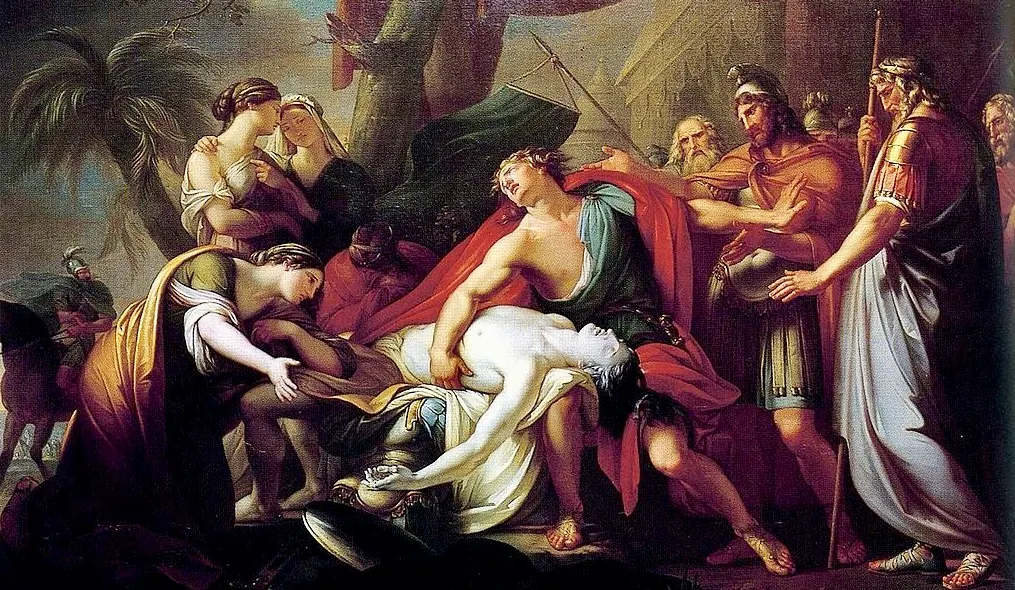
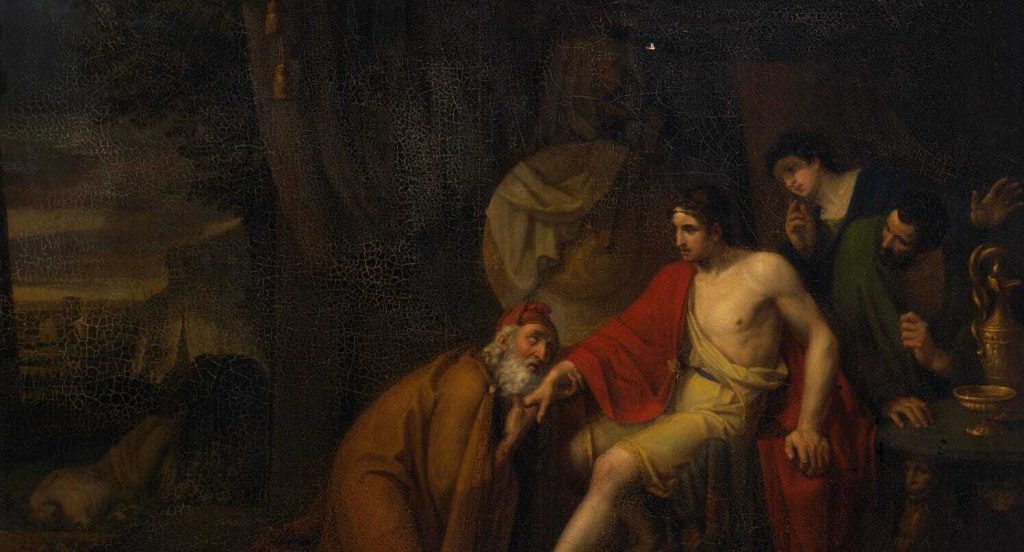
But his revenge against Hector is incomplete until he desecrates Hector’s body. He ties Hector’s feet to the back of his chariot leaving his head to drag on the rocky earth as he circles three times around Patroclus’ funeral bier—and repeatedly around Troy’s walls—to dishonor the fallen Trojan hero. Moreover, he keeps Hector’s corpse in the Greek camp for twelve days, defiling it daily, until King Priam, Hector’s grieving father, furtively comes to Achilles’ tent for permission to retrieve it.
In another poignant scene, kneeling before Achilles as a supplìant, Priam humbly asks the man-god for Hector’s body: “If you let me arrange a proper funeral for Hector, Achilles, I would certainly be grateful.”
At long last, Achilles shows compassion for his adversary and the killer of his beloved Patroclus and agrees to delay battle for twelve days: “Old King Priam, this will happen as you request. I will hold back the war as long as you have asked.” The Iliad ends with Hector’s magnificent twelve-day-long funeral where, like Briseis had before them, Helen, Andromache, and Hecuba perform laments.
Women as Property
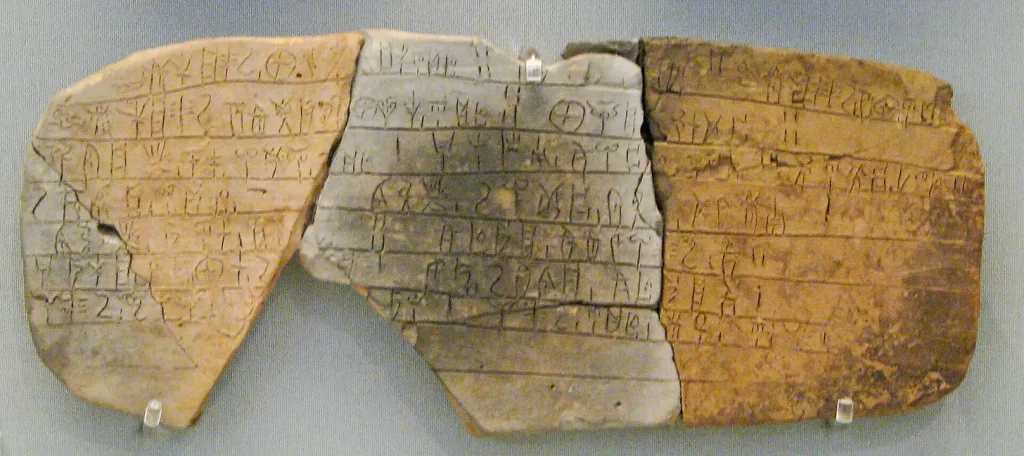
Throughout the epic, Briseis is treated as a non-entity, Achilles’ property. He refers to her as “captive of my spear,” Alternatively in the epic, she is simply referred to as “prize” or “girl”. Stripped of her home, her family, and her personhood, in some traditions, even her name is in question. Indicative of her having no individuality, Briseis is merely a patronymic and literally means “daughter of Briseus” a local priest in Lyrnessus. A woman without a name, without a home or identity is redolent of some of the women documented in the Linear B tablets from Pylos which depict women playing various roles.
The nameless women are not differentiated and are merely identified by letters such as “Aa,” “Ab,” etc., recorded alongside the tasks and workgroups assigned to them. From what we can glean from the tablets, they were female laborers who had no social or economic autonomy and were attached to the palace complex as dependents.
Similar to Briseis, as well as what Andromache and Hecuba would eventually become, they appear to have been enslaved women resulting from the many Greek conquests. Almost half of them received an ethnic designation, with many originating from the eastern Aegean, near Troy in present-day Turkey.After their defeat they were subsequently deported to Greece and given repetitive tasks, such as textile work, including carding, spinning, and weaving.
Many scholars argue that the Pylos Linear B tablets suggest that the Homeric epics accurately portray the victimization and abuse of historical women who were associated with and enslaved by the extensive Mycenaean palace complex. Like Briseis, the enslaved women were frequently exploited and marginalized. Devoid of identity, they were nameless scribbles on a roster facing a life of servitude with no social or economic independence and at the complete mercy of their Greek captors.
Throughout the Iliad, Briseis’s suffering reveals a hierarchical society where honor and status are of greater value than a woman’s freedom or humanity. By treating her as property, the epic exposes the cruelty and dehumanization at the heart of heroic warfare. Briseis’ looming presence throughout the Iliad casts a long shadow over the shining era known as the “Age of Heroes.”
Published in Classical Wisdom